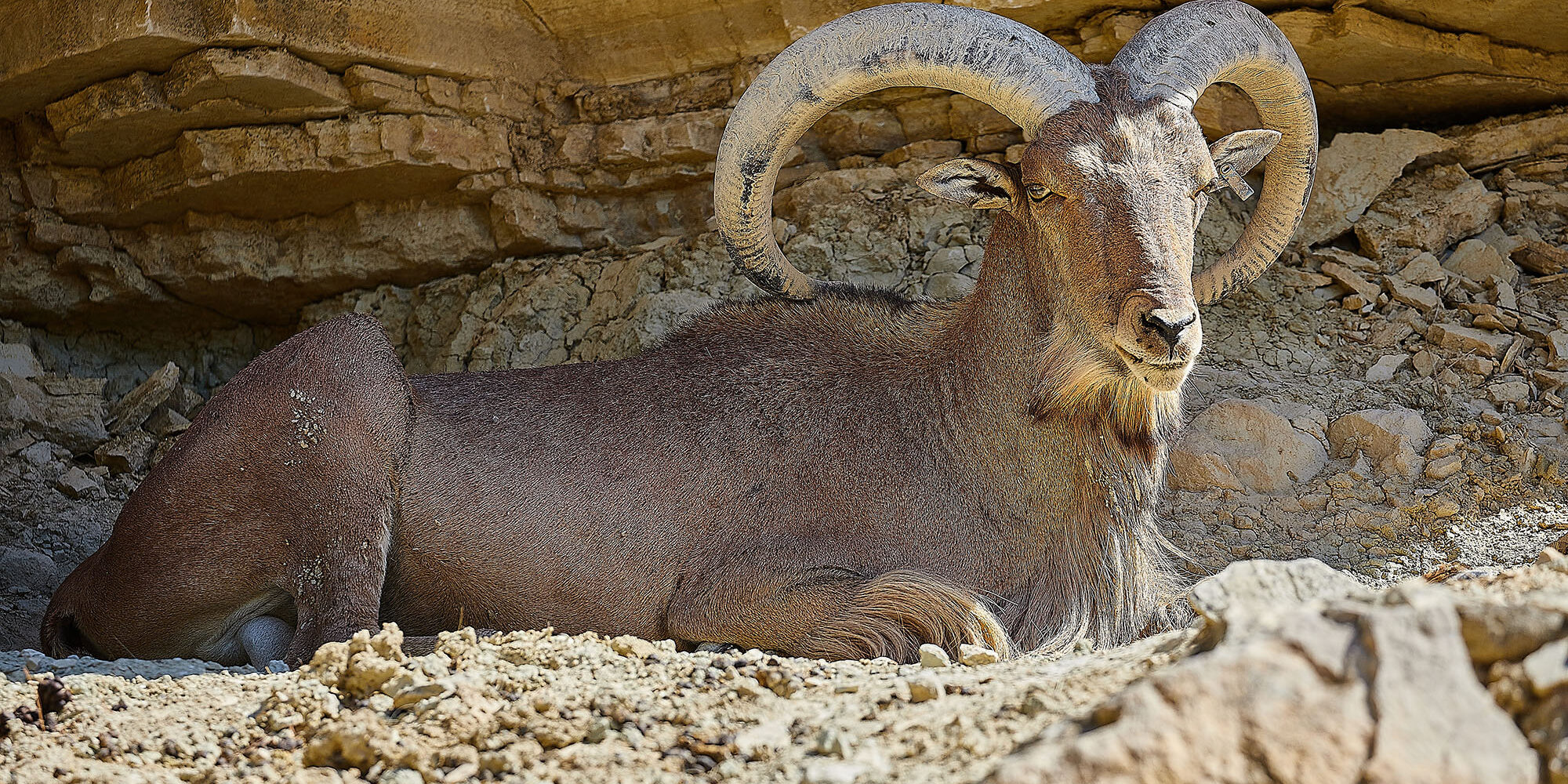
The Texas Parks and Wildlife Commission has officially classified aoudad sheep as a “harmful or potentially harmful exotic animal,” a move that gives wildlife officials and landowners new tools to manage the booming population of non-native sheep. Among them: helicopter hunting.
The regulation, which took effect June 4, 2025, now allows landowners or their agents to hunt aoudad from helicopters under the same aerial control permits used for feral hogs and coyotes. According to TPWD’s updated rule summary, the change is intended to protect native wildlife, particularly desert bighorn sheep, which face competition and disease risk from expanding aoudad herds.
Aoudad, also known as Barbary sheep, were introduced to Texas in the 1950s and have since established large, free-ranging populations across West Texas. They’re prized among hunters for their challenging terrain and rugged looks, but state biologists say their unchecked spread is threatening native species and habitat integrity.
Bighorn restoration collides with non-native spread
Texas has spent decades and millions of dollars reintroducing bighorn sheep to their historical mountain ranges. But aoudad, which thrive in the same arid terrain, have been shown to outcompete bighorns for food and water. They also carry pathogens like Mycoplasma ovipneumoniae, a bacteria that can cause fatal pneumonia outbreaks in bighorn populations.
By adding aoudad to the harmful exotic list, TPWD gains more authority to control their movement, require permits for transport, and allow lethal removal, including by air. According to Texas Administrative Code §65.153, aerial hunting permits are available for landowners and qualified agents to remove designated exotic and nuisance species.
Not banned, but regulated
The new rule doesn’t ban the hunting or possession of aoudad. Private landowners may continue to offer guided hunts, and there is no closed season for the species. However, transporting or releasing live aoudad now requires a permit, and unpermitted release is prohibited.
The regulation faced mixed public comment. Some ranchers and outfitters pushed back, citing the species’ economic value. Others, particularly wildlife managers and conservation groups, supported the change as a necessary step for long-term ecosystem health.
Aerial control just one piece of the strategy
Texas has previously employed helicopters to manage invasive hogs and coyotes, and the addition of aoudad to that list marks a significant escalation in the state’s management posture.
Aoudad are also under similar scrutiny in New Mexico, where they’ve been removed in some areas to protect endangered bighorn herds. With populations spreading and habitat pressures mounting, Texas appears to be following suit—this time, from the air.
For full details on the regulation and permit requirements, visit the TPWD exotic species rules page.